garden design

Sunday, 24 May 2020

Allotment Pond

Installing a pond on your allotment is relatively easy, looks good, encourages wildlife and can be completed within a day.

I used a preformed 140-litre plastic pond liner for my allotment.

Find a shelterd spot away from heavily used paths and in a sunny position
Place gravel and stones in the bottom of the pond.
Add water plants to help oxygenate the water and provide shade.   Placing a waterlily in the pond will help keep the water clear.
Always make sure that smaller animals who may fall into the pond have an escape route.  Provide stepping stones, a beach area, branches or small ramp.

For more information here's a link to the RHS page regarding wildelife ponds

https://www.rhs.org.uk/advice/profile?PID=622


Friday, 22 May 2020

Straw Bale Gardening


Using straw bales to make raised planting beds.  I first heard of this many years ago and thought this year I'd give it a go.  There's a bit of prep to do before planting as the bales need to be "seasoned" for a couple of weeks before you do.  The bales will break down over time and can then be used to mulch other planting areas.


Place the bales cut side up.  Soak the bales with water over several days.  Add a layer of compost and some vegan/organic fertiliser.

Add plants!

Any type of straw can be used but Wheat and Barley are preferred.

I purchased my bales from a local farm here in Hastings, East Sussex


Thursday, 21 May 2020

Recycled Oak Planters


Small and medium planters I’ve made from weathered oak planks.

Tuesday, 19 May 2020

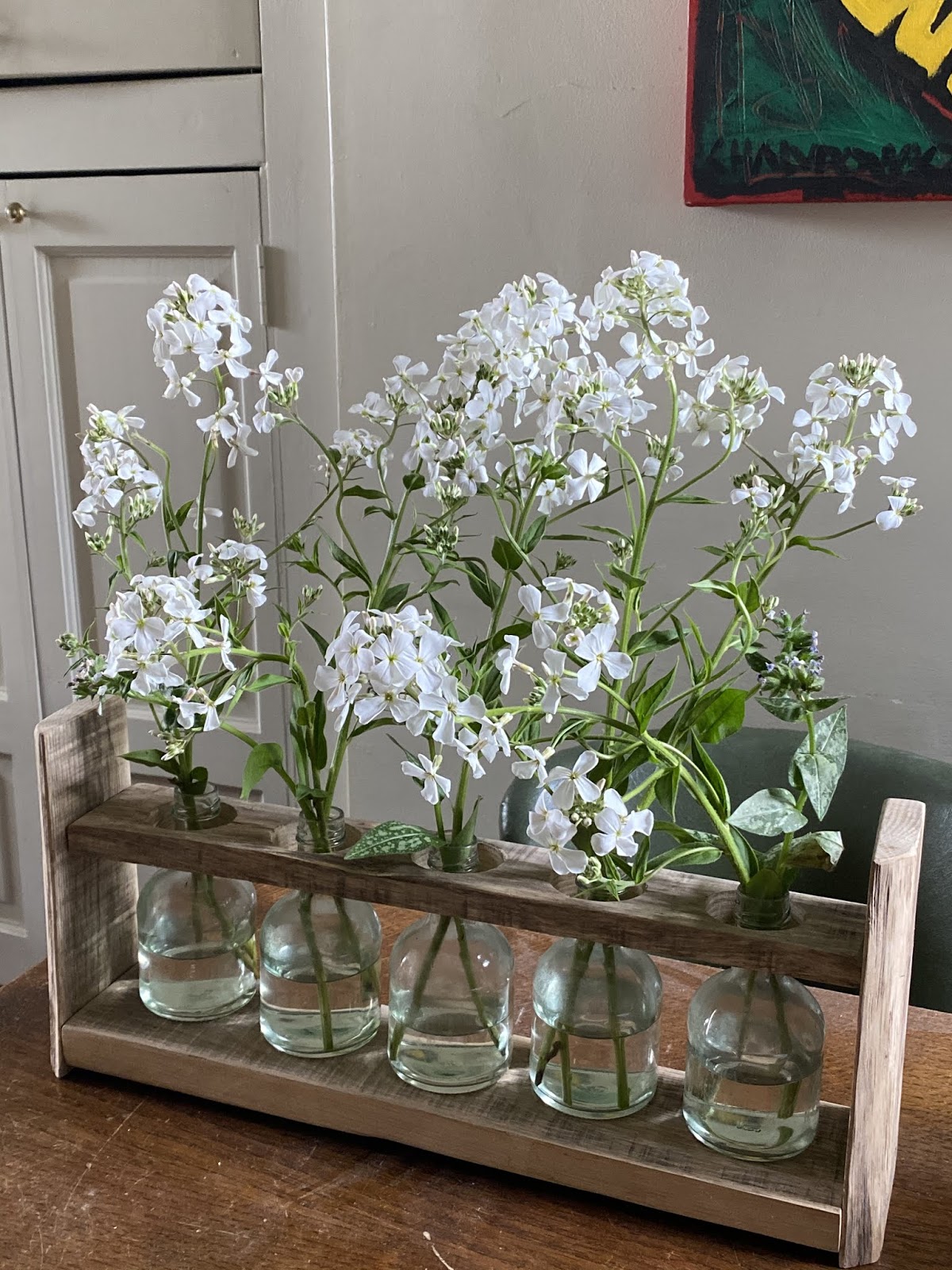
Recycled oak flower holder

Made of recycled weathered oak planks and repurposed bottles.  This is perfect for displaying singles blooms or groups of different flowers and stems.

The flowers are Hesperus matronalis ‘Alba’. Lovely night scented flowers.  Perfect for pollinators, self seeds, hardy.

Saturday, 16 May 2020

Vegan friendly/Peat Free Growing media

Veganic gardening is becoming much more popular.  I've been gardening veganically for many years.

Homemade compost is the best but not always available when you need it.  This company actually lists that it is 'Suitable for Vegans'


https://www.melcourt.co.uk/products/gardener/peat-free-composts


sylvagrow-logo

MULTI-PURPOSE COMPOST WITH ADDED JOHN INNES

  • Superb quality, 100% peat-free compost as used by professionals
  • With added sterilised loam
  • Suitable for a wide range of garden applications including potting-on, planting out and as a growing bag
  • Available in 50L bags and 15L carry packs
  • Suitable for vegans
  • RHS Endorsed

Thursday, 14 May 2020

New purpose for vintage galvanised poultry feeders


I've made hanging planters using old galvanised poultry feeders and waterers.  This is very simple to do.  Some sturdy chain, a few S hooks and a drill.  These can be used indoors or outside.  If using them outside its best to add some drainage holes.


Friday, 8 May 2009

Allotments


There's much talk of allotments these days. 

Magazines and tabloids espouse the virtues of allotments with slogans like 'grow your own' or 'save money on your food bills'.

Last year my partner and I decided that we would get an allotment too! Some of us are lucky enough to start with a well tended allotment but many more of us begin with waist-high couch grass, weeds and brambles. Daunting to say the least! Where oh where were the nicely turned beds of fluffy soil, neat walkways and raised beds that I see pictured in the magazines?

We have ten rods (“allotment-speak”) but to you and me that’s 10 x 22 meters. Unfortunately it was of the 'untended' variety. To begin with, the clearing and cultivating of the plot took a great deal of time, energy, effort and considerable commitment. But after weeks of 'hard labour' and a whole growing season under our belts the allotment is, well, looking like an allotment!

The joy of planting, harvesting and eating veggies we've grown makes us very happy. All the hard work, time and energy that it entails are worth it. There's nothing like picking your first crop of rhubarb or runner beans to make you feel good.

Here are a few tips for the beginner.

If waiting lists are too long in your area see if you can share an allotment or volunteer to help out a friend and share in the harvest

Don't be tempted to cultivate too much ground at once. Start with small plots that can be easily maintained.

Grow easy veg to begin with. Potatoes, beans, peas and herbs always produce a good crop and help the soil, too.

Don't forget to plant flowers which can be cut for the house and encourage biodiversity.

Go to car boot sales and second hand shops to find inexpensive tools and equipment or join your local 'freecycle' network.

Seed swaps and plant exchanges are a great way to get free plants.

Check out the National Society of Allotment and leisure Gardeners Web site athttp://www.nsalg.org.uk.

Read all you can and talk with other allotment growers. They will have a wealth of information to offer.

Most of all enjoy your allotment, take a flask of tea and a sandwich, sit back and relax for a little while (at least!).